Smarter Objects from Fluid Interfaces on Vimeo.
Spiffy augmented reality
Se afișează postările cu eticheta spatiu. Afișați toate postările
Se afișează postările cu eticheta spatiu. Afișați toate postările
marți, martie 12, 2013


marți, februarie 05, 2013
How many alien civilizations exist? - Ecuatia Drake

In 1960, Frank Drake conducted the first search for radio signals from extraterrestrial civilizations at the National Radio Astronomy Observatory in Green Bank, West Virginia. Soon thereafter, the National Academy of Sciences asked Drake to convene a meeting on detecting extraterrestrial intelligence. The meeting was held at the Green Bank facility in 1961. The equation that bears Drake's name arose out of his preparations for the meeting: As I planned the meeting, I realized a few day[s] ahead of time we needed an agenda. And so I wrote down all the things you needed to know to predict how hard it's going to be to detect extraterrestrial life. And looking at them it became pretty evident that if you multiplied all these together, you got a number, N, which is the number of detectable civilizations in our galaxy. This, of course, was aimed at the radio search, and not to search for primordial or primitive life forms.BBC a pus la dispozitie un calculator dinamic pentru ecuatia Drake: http://www.bbc.com/future/story/20120821-how-many-alien-worlds-exist
miercuri, aprilie 25, 2012
Planetary Resources - Asteroid mining
Mai multe informatii: http://www.forbes.com/sites/timworstall/2012/04/25/how-planetary-resources-can-make-a-profit/
Pagina proiectului:http://www.planetaryresources.com/
Pagina proiectului:http://www.planetaryresources.com/
luni, martie 19, 2012
miercuri, martie 07, 2012
vineri, noiembrie 18, 2011
Mars rover "Spirit" - intreaga misiune
La sfarsit se impotmoleste in nisip. Acolo este blocat si acum.
sâmbătă, octombrie 29, 2011
spaceport america - complete
Facut de foster + partners
Construit:


Concept:

Cam dezamagitor.
Mai multe poze: http://www.designboom.com/weblog/cat/9/view/17133/foster-partners-spaceport-america-complete.html
Construit:
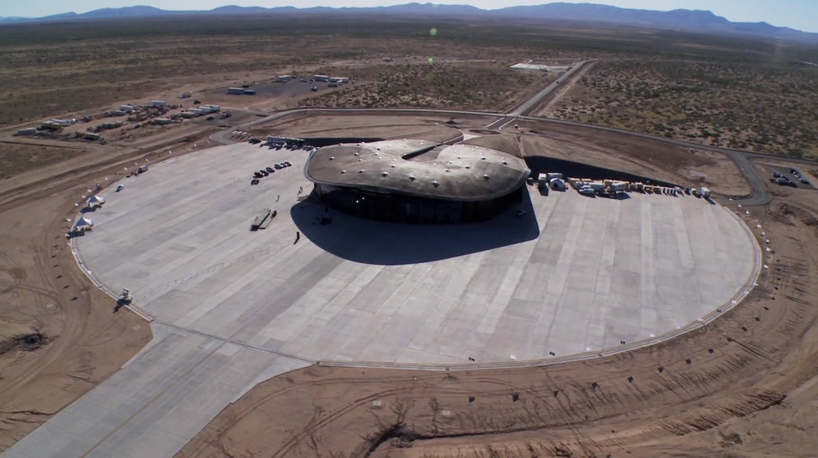
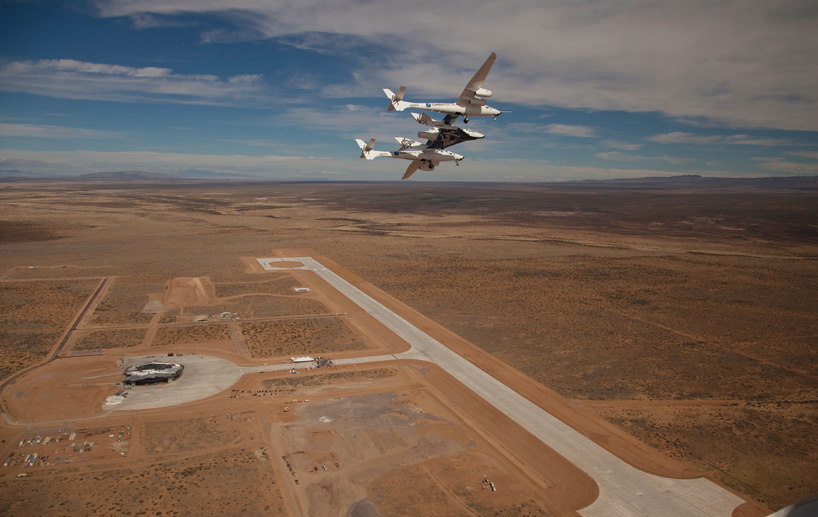
Concept:

Cam dezamagitor.
Mai multe poze: http://www.designboom.com/weblog/cat/9/view/17133/foster-partners-spaceport-america-complete.html
marți, iunie 07, 2011
marți, aprilie 12, 2011
The lost astronauts
Then, on 28 November 1960, the Bochum space observatory in West Germany said it had intercepted radio signals which it thought might have been a satellite. No official announcement had been made of any launch.
“Our reaction was to immediately switch on the receivers and listen,” said Achille. After almost an hour of tuning in to static, the boys were about to give up when suddenly a tapping sound emerged from the hiss and crackle.
“It was a signal we recognised immediately as Morse code – SOS,” said Gian. But something about this signal was strange. It was moving slowly, as if the craft was not orbiting but was at a single point and slowly moving away from the Earth. The SOS faded into distant space.
As the brothers listened, the cosmonaut experimented with zero gravity. They lost the signal as the cosmonaut prepared for re-entry while whistling a communist hymn. It was only then that President John F Kennedy was awoken at 2am to be given the news that Yuri Gagarin was the first man in space.
Five weeks later, on 19 May 1961, the brothers picked up what is now their most infamous recording, which they claim is of a woman cosmonaut whose ship burned up on re-entry. Then, a few days after this, they picked up a tantalising few seconds of another transmission: “Conditions growing worse, why don’t you answer?” Both recordings are clear and accurately translated.
One fatality that we do know about from those early days was that of Valentin Bondarenko. At 24, he was the youngest cosmonaut. He met his terrible end on 23 March 1961, while in a pressure chamber as part of a 10-day isolation exercise. Bondarenko dropped an alcohol-soaked cotton swab on a hot plate, which – in the oxygen-rich environment – started a fire that ignited his suit. It was 20 minutes before the pressurised door could be opened. Bondarenko was pulled out barely alive, crying “It was my fault”, and died eight hours later, comforted by his best friend, Yuri Gagarin. News of the accident was hushed up until 1986.
Este fascinant articolul.
http://www.forteantimes.com/features/articles/1302/lost_in_space.html
vineri, aprilie 01, 2011
GOCE Geoid - the true shape of Earth
After two years in orbit, the European Space Agency’s (ESA) Gravity field and steady-state Ocean Circulation Explorer (GOCE) is nearing the end of its planned life span in February, producing the most accurate map ever of the so-called geoid - an Earth-encompassing spirit level and global reference surface. An unused supply of xeon fuel will allow the mission to be extended until at least the end of 2012.
Markedly different from a simple sphere or ellipsoid, the geoid is the mathematically 'true' shape of Earth. It represents a motionless global ocean but takes into account the effects of the Earth’s rotation, weight difference resulting from the position of mountains and ocean trenches, and uneven mass distribution and density variations in the planet’s interior.
The resulting small variations in the Earth’s gravitational field feature on the geoid as ‘bulbs’ and ‘dips’ in an idealized ‘ocean’ surface.
ESA scientists presented the latest version of the GOCE-derived geoid map – based on eight months of data processed so far – at a user workshop this week in Munich, Germany.
Sursa: http://www.dailygalaxy.com/my_weblog/2011/04/earths-true-shape-revealed-for-1st-time.html
miercuri, februarie 23, 2011
duminică, februarie 20, 2011
Numarul de planete din galaxia noastra estimat

Scientists have estimated the first cosmic census of planets in our galaxy and the numbers are astronomical: at least 50 billion planets in the Milky Way.
At least 500 million of those planets are in the not-too-hot, not-too-cold zone where life could exist. The numbers were extrapolated from the early results of NASA's planet-hunting Kepler telescope.
Kepler science chief William Borucki says scientists took the number of planets they found in the first year of searching a small part of the night sky and then made an estimate on how likely stars are to have planets. Kepler spots planets as they pass between Earth and the star it orbits.
So far Kepler has found 1,235 candidate planets, with 54 in the Goldilocks zone, where life could possibly exist. Kepler's main mission is not to examine individual worlds, but give astronomers a sense of how many planets, especially potentially habitable ones, there are likely to be in our galaxy. They would use the one-four-hundredth of the night sky that Kepler is looking at and extrapolate from there.
Borucki and colleagues figured one of two stars has planets and one of 200 stars has planets in the habitable zone, announcing these ratios Saturday at the American Association for the Advancement of Science annual conference in Washington. And that's a minimum because these stars can have more than one planet and Kepler has yet to get a long enough glimpse to see planets that are further out from the star, like Earth, Borucki said.
Tot articolul: http://news.yahoo.com/s/ap/us_sci_cosmic_census
marți, ianuarie 25, 2011
Dumitru Prunariu absent nemotivat

În ianuarie 2011, Prunariu a primit doar 30% din valoarea pensiei din decembrie 2010, pentru că statul i-a scos din acte cei trei ani de şedere în fosta URSS, perioadă în care s-a pregătit chiar pentru istoricul zbor în spaţiu.
"Pe vremea lui Ceauşescu era un banc cu mine. Zice că atunci când m-am întors din cosmos aş fi fost întrebat: Prunariu, cum considerăm zilele acelea de stat în cosmos? Zile libere sau concediu fără plată? Ei bine, acum... Nu s-a găsit exact perioada din care am intrat în aviaţia miliară până când m-am întors în pregătire, timp de trei ani de zile, din orăşelul stelar", a povestit Prunariu.
Tot articolul: http://www.adevarul.ro/actualitate/social/dumitru_prunariu-cosmos-cosmonaut-roman-pensie-diminuare_0_412158939.html
vineri, noiembrie 05, 2010
vineri, iulie 23, 2010
miercuri, iunie 30, 2010
Prima poza clara a unei planete extrasolare

(Click pt mai mare)
This photo taken by Gemini Observatory's adaptive optics system in infrared light shows the star 1RSX J160929.1-210524 and its likely ~8 Jupiter-mass planet(dot at upper left). The extrasolar planet is touted as the first directly photographed.Credit: Gemini Observatory
In acest moment va uitati la o planeta din alt sistem solar de 8 ori mai mare decat Jupiter.
Se afla la 500 de ani lumina ceea ce inseamna ca ce vedem noi acuma s-a intamplat pe 29 iunie 1510.
Tot articolul: http://www.space.com/scienceastronomy/first-alien-planet-photographed-confirmed-100629.html
sâmbătă, iunie 26, 2010
duminică, iunie 06, 2010
Cat de departe este marte?
http://www.slimfigures.co.uk/archive/comic76.php
^ Click pt a afla. Proportional cu distantele reale.
Tip:
Arrow keys: Impulse power
Page Down: Full impulse
Scrollbar: Warp drive
End key: Wormhole
^ Click pt a afla. Proportional cu distantele reale.
Tip:
Arrow keys: Impulse power
Page Down: Full impulse
Scrollbar: Warp drive
End key: Wormhole
miercuri, iunie 02, 2010
miercuri, mai 26, 2010
Abonați-vă la:
Postări (Atom)