


Inspirat de userul reddit ItsJustAPrankBro care a facut varianta americana: http://i.imgur.com/4bQE8Is.jpg
Imaginea de ansamblu:
 |
| (click for fullres) |
|
| (click for fullres) |


Unlike the usual LED bulbs, in which the LED chips are packed flat in a square metal plate, the LED chips of FiLED bulb are encapsulated in a transparent column of glass or synthetic sapphire, coated with phosphor. This new packaging technology with phosphor molding is called “chip-on-glass” (COG). The column of glass or synthetic sapphire is very tiny, with a diameter of only 1.5mm(0.06inches), but with a length of 30mm(1.18inches). The LED filament is formed after the COG encapsulation process. Using this technology, the LED filaments emit light in all directions, and produce nearly the same full illumination and warm glow of the traditional incandescent light bulbs that people have come to enjoy and appreciate. Using 4 filaments containing 3.6W LEDs(in series or parallel), a brightness of 350 lumens can be achieved. The light efficiency is as high as 100 lumens/w. Using the color rendering index of lighting quality, the FiLED score is 90, which compares well with the benchmark daylight score of 100.http://www.tevaja.com/?page_id=11
Generative Impressionism from Gil on Vimeo.
Impressionism aims to induce a dance of color and movement using harsh brushes of oil on canvas. My program "Generative Impressionism" takes a step beyond by bringing the brushstrokes to life. Each stroke exists on it's own taking the color and path appropriate to it. Alone it flows in the current... but look beyond.
If you take a step back you can perceive a striking image... a living image. Because it is living you must observe it as long as it survives. Like a blooming flower after a while it wilts away so appreciate the fleeting beauty of it.
This processing sketch is the result of some ideas that I've been keeping in my head for a few years. Two full days of train rides through the country gave me the opportunity to prototype them on my laptop. Then I refined them at home resulting in what you see before you. At first I only ran it on paintings but it became clear that it can do so much more so I tried it on a couple of photos.
In the video you see the best results so far:
Starry Night - Vincent van Gogh
Nymph in the grass - Nicolae Grigorescu
Roses - Stefan Luchian
A photo of japanese spring roses from my garden
A photo of me
San Giorgio Maggiore al Crepuscolo - Claude Monet
The music is the Romanian Rhapsody by George Enescu in a special computer generated mix of sampled audio and MIDI tracks. The Romanian Rhapsody and the sampled tracks are public domain.
Maybe I will organize a full exhibition with all the images the program interpreted.
I will post the code on OpenProcessing as soon as I can make it readable.
A picture is worth a thousand words, but creating cool infographics can be time-consuming. So we've found 20 amazing tools to make it easier. It’s often said that data is the new world currency, and the web is the exchange bureau through which it’s traded. As consumers, we’re positively swimming in data; it's everywhere from food labels to World Health Organisation reports. As a result, for the designer it’s becoming increasingly difficult to present data in a way that stands out from the mass of competing data streams.

The paper torso project began in 2011 when I took up a suggestion by Ms. Joanne Nakora from the International School Nadi in the Fiji Islands to design and build a torso with removable organs. 3 months later I had completed a first version and uploaded some images to my Flickr account. In January 2012 My Modern Met blogged about it which led to many requests to make the templates available. Improving certain parts of the design, fitting the patterns to A4 paper and working out how to best write the instructions took about 4 times as long as building the first version. The templates and instructions are available by clicking on the banners below. In the spirit in which this project was started they are available for free. If you manage to complete some of the organs and/or the torso I would appreciate it if you could send me an email or some images of it.
The cave drawings were found by archaeologist Marc Azema and French artist Florent Rivere, who suggest that Paleolithic artists who lived as long as 30,000 years ago used animation effects on cave walls, which explains the multiple heads and limbs on animals in the drawings. The images look superimposed until flickering torch-light is passed over them, giving them movement and creating a brief animation.Tot articolul: http://www.webpronews.com/prehistoric-animated-cave-drawings-discovered-in-france-2012-06
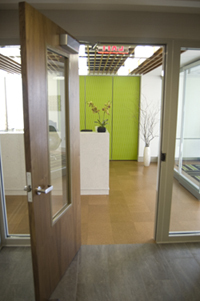
We’ve all experienced it: The frustration of entering a room and forgetting what we were going to do. Or get. Or find.
New research from University of Notre Dame Psychology Professor Gabriel Radvansky suggests that passing through doorways is the cause of these memory lapses.
“Entering or exiting through a doorway serves as an ‘event boundary’ in the mind, which separates episodes of activity and files them away,” Radvansky explains.
“Recalling the decision or activity that was made in a different room is difficult because it has been compartmentalized.”


So what we see above is the same greenish blue region, touching the green on top and the blue on bottom — with no particular seams, implying (correctly) that there is no actual difference in color and what is detected is merely an illusion.
And the story would end there, if not for DanKam. DanKam’s an augmented reality filter for the color blind, designed to make clear what colors are what. Presumably, DanKam should see right through this illusion. After all, whatever neurological bugs cause the confusion effect in the brain, certainly were not implemented in my code.
You might notice that while we’re recovering the color, or chroma relatively accurately, we’re losing detail in perceived luminance. Basically, we’re losing edges.
It’s almost like the visual system sees dark vs. light at a different resolution than one color vs. another.
This, of course, is no new discovery. Since the early days of color television, color information has been sent with lower detail than the black and white it augmented. And all effective compressed image formats tend to operate in something called YUV, which splits the normal Red, Green, and Blue into Black vs. White, Red vs. Green, and Orange vs. Blue (which happen to be the signals sent over the optic nerve). Once this is done, the Black and White channels are transmitted at full size while the differential color channels are halved or even quartered in detail. Why do this? Because the human visual system doesn’t really notice. (The modes are called 4:2:2 or 4:1:1, if you’re curious.)
So, my theory is that these color artifacts aren’t the result of some complex analysis with pattern matching, but rather the normal downsampling of chroma that occurs in the visual system. Usually, such downsampling doesn’t cause such dramatic shifts in color, but of course the purpose of an optical illusion is to exploit the corner cases of what we do or do not see.


